👇 Ember First 👇
Your brain literally forms new neural pathways when you learn something difficult—growth mindset physically changes your brain.
People with a growth mindset are more likely to persist after failure because they see mistakes as information, not identity.
The phrase “I can’t do this… yet” is one of the simplest ways to activate a growth mindset.
Studies show praising effort over talent helps children develop more resilience and confidence long-term.
Tiny daily improvements often create bigger life changes than massive bursts of motivation.
Your comfort zone shrinks or expands based on what you repeatedly do, not what you wish for.
Before we go any further, if you haven’t read the first two parts of this series, I highly recommend starting there. In Part 1, I share the foundation of the Ember Theory and how it was born, and in Part 4, we break down how to nurture your growth mindset.
👉The Ember Theory Series — Part 1: A New Philosophy for Rebuilding Your Life
👉The Ember Theory Series — Part 2: What to Do When Life Falls Apart
👉 The Ember Theory Series — Part 3: Why You Feel Stuck (But You’re Actually Healing)
Welcome to Part 4 Of The Ember Theory Series
When I first got sober, I became obsessed with personal development, knowledge of any kind, and being informed. A friend told me I had developed a growth mindset. I laughed in his face.
I knew what it meant on a surface level, but I was still a mess. And honestly, I didn’t care.
I was too busy trying to repair the nightmare of a life I had created: the one built on bad decisions, broken relationships, a lot of time in finishing school (AKA. jail), and a deeply held belief that I was simply not the kind of person things worked out for.
A growth mindset felt like something people talked about in conference rooms and college campuses. Not in the places I was living. Not in the chaos I was navigating every single day.
But here is what I know now that I didn’t know then.
I already had one. buried under years of pain and fear and survival mode, there was a tiny, stubborn belief that maybe, just maybe, things didn’t have to stay exactly the way they were. Back then, even if my growth mindset consisted of reupping five times a week, instead of four, or doubling my heroin sales, it still involved a growth mindset, right?
Even though that belief didn’t feel like a growth mindset. It felt like desperation.
But desperation, it turns out, is sometimes the most powerful starting point of all.
Take Free Quiz To Identify What Stage Your Ember Is In!
Take The Ember Assessment™ & Discover What Phase of Rebuilding You’re Really In
You are not lazy.
You are not failing.
And you are definitely not broken.
Sometimes, you are simply trying to rebuild your life from emotional ashes while expecting yourself to function like someone who was never burned in the first place.
The Ember Assessment™ was designed to help you uncover where you truly are in your healing, rebuilding, and transformation journey so you can finally stop guessing at what you need.
Through a series of powerful and deeply reflective questions, you’ll discover:
- Which Ember Phase you are currently in
- The emotional patterns shaping your life right now
- What may secretly be keeping you stuck
- The strengths you may not even realize you still carry
- The kind of healing and support your nervous system is craving
- Your most aligned next steps moving forward
This is not a surface-level personality quiz filled with generic answers.
The Ember Assessment™ was created for people rebuilding themselves after hardship, heartbreak, burnout, addiction, trauma, identity loss, spiritual awakening, or life completely falling apart.
Whether you feel lost, exhausted, disconnected, hopeful, healing, or somewhere in between… your fire is still alive.
✨ Take The Ember Assessment™ and find out what your inner ember has been trying to tell you all along.

Growth Mindset: The Power of an Open Mind
Quick Answer: A growth mindset is the basic belief that your abilities, intelligence, and character can grow through effort, learning, and experience. Stanford professor Carol Dweck introduced this concept through decades of research — and it changed how the world understands human potential. But for people rebuilding their lives from the inside out, the growth mindset is not a productivity strategy. It is a survival skill.
What is A Growth Mindset?
The concept of a growth mindset was introduced by Stanford psychologist Carol Dweck through her landmark research at Stanford University.
Her book Mindset: The New Psychology of Success brought this idea to millions — and her TED Talks made it one of the most discussed ideas in personal development, mental health, and education in recent years.
The core idea is simple:
Your basic abilities are not fixed at birth. With hard work, dedication, and a willingness to embrace challenges, you can grow in ways you never expected.
Fixed Mindset vs. Growth Mindset — What's the Real Difference?

This is where most people get it wrong. I will make it simple for you in a way that some may take offense to, but I don’t really care. Most women have a growth mindset. Women want to grow, evolve, and get better. Fixed mindset: my baby daddy, and most baby daddies. Work all day, if you’re lucky; come home, watch TV until dinner; eat dinner; go back to the couch and the TV; yell at kids instead of spending time with them; go to bed, and wake up in the morning to do it all again.
A lot of women do the same, but the fixed mindset man is totally fine with it. You heard me. Yes, totally fine with living life on repeat every… single… day… Totally not my thing, and I have yet to find a woman who is okay with it. Make sense?
Side Note: I am not being biased or prejudiced against men, and I am not a man-hater. I can also tell you that my baby daddy is the hardest-working person I have ever met. He’s a roofer, and he never ever complains. I am simply saying that more men happen to be fixed mindset. Please don’t take offense. You know I love you.
A fixed mindset is also so much more. It’s not just stubbornness or laziness, though. It is a basic belief — deeply held — that your basic qualities, intelligence, and talent are carved in stone.
A fixed mindset sounds like:
- “I’m just not a math person.”
- “I’ve always been this way.”
- “Natural talent is either there or it isn’t.”
- “There’s no such thing as real change for someone like me.”
A growth mindset sounds like:
- “I haven’t figured this out yet.“
- “Constructive feedback makes me better.”
- “Hard work matters more than natural talent.”
- “New challenges are how I grow.”
Dweck’s studies showed this split appearing in young children and persisting through high school, college, and professional life.
Students with a fixed mindset avoided new challenges to protect their image. They interpreted negative feedback as a verdict on their worth.
Students with a growth mindset embraced challenges as part of the learning process. They showed greater persistence, greater confidence, and far better problem-solving over time.
The difference between these two groups was not intelligence. It was a basic belief about whether intelligence could grow.
What Does the Research Actually Say?

Dweck’s work at Stanford University is among the most replicated in modern psychology.
Published across peer-reviewed journals, including the Psychological Bulletin, Dweck’s studies revealed something that changed how researchers understood students’ behavior, motivation, and long-term success.
Here is what the research found:
- Students who received process praise — praised for effort and strategy rather than ability — showed dramatically better persistence over time.
- Growth-mindset interventions in schools led to measurable improvement in grades, with students who had been receiving a lower grade moving toward a higher grade after mindset shifts.
- Students’ persistence in difficult situations increased significantly when they were taught that the amount of intelligence they had was not fixed — that the brain itself could grow.
- Implicit theories of intelligence — whether students believed intelligence was fixed or growable — predicted behavior more reliably than actual ability scores
- Younger students who received growth mindset belief training showed lasting changes in how they approached new skills and new challenges.
Researcher David Yeager expanded on Dweck’s work in high school settings — studying how growth mindsets could be cultivated through targeted growth-mindset interventions and how those shifts rippled into mental health and personal relationships.
The findings were consistent:
A growth mindset is not a feel-good concept. It is a measurable, evidence-based shift in how the brain approaches difficulty, and it changes outcomes in real, trackable ways.
Why Most Growth Mindset Advice Misses the Point

Here’s the honest truth.
Most growth mindset content online was designed for a very specific starting point: stability, academic environments, and a nervous system not in survival mode.
Dweck’s foundational research examined students’ behavior in controlled settings. Growth-mindset interventions were tested with college students, high school students, and younger students navigating performance goals and academic pressure.
That research is invaluable. But it doesn’t account for:
- The person who is not worried about a lower grade is worried about making it through the year.
- The person for whom fear of failure is not abstract; it is yesterday’s reality.
- The person whose comfort zone was destroyed long before they ever heard the phrase growth mindset.
- The person in the most challenging times of their life, with a host of different thoughts running through their mind at once.
This is the gap the Ember Theory was built to fill.
The Ember Theory's Approach to Growth Mindset
The Ember Theory does not replace Dweck’s work. It extends it.
In the Ember Theory framework, the growth mindset belief is not reframed as enthusiasm for new challenges. It is reframed as something quieter and far more powerful.
We call it Cognitive Openness.
The radical, sometimes desperate, decision to stop being completely certain that nothing can change.
This is not a positive mindset layered over pain. It is not affirmations, motivational content, or toxic positivity.
It is the willingness, even without belief, even without hope, even without energy, to leave a crack in the door.
“The growth mindset was built for achievers. Cognitive Openness was built for survivors.”
The hallmark of the growth mindset, according to Dweck’s work, is seeing effort as the path to mastery. The Ember Theory agrees — but adds one layer beneath that.
Before effort. Before hard work. Before embracing new challenges.
There has to be an opening.
My Starting Point — The Night the Opening Happened
I did not develop a growth mindset through Dweck’s work, TED Talks, or a personal development course.
I came to it through desperation.
I was not thinking about professional success or becoming the best version of myself. I was not thinking about new skills, performance goals, or stepping outside my comfort zone.
I was living my life as a woman who had spent most of her adult life in jail for petty, non-violent offenses, who was never even offered long-term treatment. I definitely wasn’t thinking about applying to Wellesley. My focus was on surviving the next hour and not going back to jail.
And in that space — when everything felt like evidence that nothing could ever change — something shifted.
Not because I believed it would.
Because I got bone-tired of being certain it wouldn’t.
That exhausted crack in the armor?
That is the opening. That is the first step. And it is enough.

How to Build Your Own Growth Mindset — Even When Life Is Hard
This is not the textbook version. This is the version built for real people starting from difficult situations, not college campuses, office hours, or controlled research environments.
Step 1 — Start With Curiosity, Not Belief
You do not need to believe things will improve. You only need to introduce one question:
💭 “What if I’m wrong about what’s possible?”
That is not toxic positivity. That is critical thinking applied to your own assumptions.
This is the first step — and it costs nothing.
Two seconds. One question. That is where every growth mindset begins — not with confidence, but with a crack of curiosity.
Step 2 — Identify Your Fixed Survival Loop
Your Fixed Survival Loop is the narrative your mind defaults to in difficult situations. It is the opposite of a growth mindset — and it sounds like:
- “This always happens to me.”
- “I’m not the kind of person who succeeds.”
- “It’s too late for me to change.”
- “I don’t have what it takes.”
These are not facts. They are patterns.
A good way to start: write down the three sentences your inner critic repeats most. Next to each one ask: Is this a fact — or is this a fixed mindset belief I’ve been carrying so long it feels like truth?
You are not arguing with it. You are creating distance from it.
Step 3 — Seek Out Evidence That Contradicts the Loop
You cannot think your way into a new mindset. Your nervous system learns through experience — not instruction.
Try this:
- Do one small act of kindness daily and notice how people respond.
- Find one personal example each day of someone who rebuilt their life from a similar starting point.
- Spend five minutes in the morning consuming something that shows you what is possible.
Each one is a new data point. Each one chips away at the fixed mindset belief that nothing can change.
This is what growth mindset research calls behavioral activation — the process of using action to shift belief, rather than waiting for belief to motivate action.
Step 4 — Reframe Negative Feedback and Constructive Criticism
One hallmark of the growth mindset — documented consistently across Dweck’s studies — is the ability to receive negative feedback without internalizing it as a permanent verdict.
Here is the reframe:
Negative feedback is not a verdict. Constructive criticism is not an attack. They are information about what is not working yet.
The word yet is doing enormous work in that sentence. It is one of the most powerful tools in the growth mindset belief system — and it costs nothing to use.
Next time you receive feedback that stings — pause. Ask: “What is this teaching me?” That pause is the growth mindset in action.
Step 5 — Protect the Opening
An open mind in a toxic environment closes fast.
This is why protection comes before expansion.
If you are surrounding yourself with people, spaces, or content that constantly confirms your fixed mindset, the opening will close before it has a chance to grow.
This is not a weakness. This is neuroscience. Your environment shapes your thinking far more than your intentions ever will.
Please Help Me Out And Support My Work By Following my New YouTube & TikTok Channels.


The Hidden Obstacle — Why Your Identity Resists a Growth Mindset

Here is the layer most personal development content skips — and it is the most important thing to understand.
Your identity is designed to protect itself.
When you have been defined by struggle, pain, or survival for a long time, your brain treats the idea of a new mindset as a kind of threat. The old version of you does not want to disappear, even if that version was in pain.
This is not a character flaw. This is not a fixed mindset you chose. This is your nervous system doing exactly what it was built to do.
The Ember Theory calls this Identity Gravity — the invisible pull of your old self-concept that makes every step toward a growth mindset feel heavier than it should.
Most self-help says: decide to change, then change.
The Ember Theory says: decide to stay open, then let the identity shift follow — slowly, imperfectly, in its own time.
The Hidden Obstacle — Why Your Identity Resists a Growth Mindset

Here is the layer most personal development content skips — and it is the most important thing to understand.
Your identity is designed to protect itself.
When you have been defined by struggle, pain, or survival for a long time, your brain treats the idea of a new mindset as a kind of threat. The old version of you does not want to disappear, even if that version was in pain.
This is not a character flaw. This is not a fixed mindset you chose. This is your nervous system doing exactly what it was built to do.
The Ember Theory calls this Identity Gravity — the invisible pull of your old self-concept that makes every step toward a growth mindset feel heavier than it should.
Most self-help says: decide to change, then change.
The Ember Theory says: decide to stay open, then let the identity shift follow — slowly, imperfectly, in its own time.
Growth Mindset and Mental Health

In recent years, researchers have begun exploring the relationship between growth mindset and mental health — and the findings are significant.
A fixed mindset does not just affect academic performance or professional success. It affects how people interpret their own suffering.
People operating from a fixed mindset tend to believe:
- Their mental health struggles are permanent character flaws.
- Their past defines their future.
- Their basic characteristics cannot change — including the ones causing them pain.
People developing a growth mindset begin to believe:
- Their mental health can improve through the right support and learning process.
- Their past is a starting point, not a sentence.
- Their most challenging times are part of the learning process, not evidence of permanent brokenness.
This shift does not happen overnight. But growth mindset research consistently shows that even small shifts in this basic belief produce measurable changes in resilience, persistence, and long-term well-being.
Why Open-Mindedness Is the First Breath Your Ember Receives
In the Ember Theory, we talk about small oxygen — the tiny inputs that keep the ember alive through the most challenging times.
Open-mindedness is the very first breath.
Not confidence. Not action. Not community. Not hard work, new skills, best practices, or best version thinking.
First comes the opening.
Because without it, nothing else can get in. A closed mind — a fixed mindset in its most entrenched form — is a sealed chamber. No new ideas. No new evidence. No new possibilities.
The moment you choose to stay open — even slightly, even skeptically, even while still doubting everything — you crack the chamber.
And air begins to move.
“You don’t need a new mind. You need to stop closing the one you have.”
Your Mind Doesn't Need to Be Fixed — It Needs to Be Opened

In the Ember Theory, we talk about small oxygen — the tiny inputs that keep the ember alive through the most challenging times.
Open-mindedness is the very first breath.
Not confidence. Not action. Not community. Not hard work, new skills, best practices, or best version thinking.
First comes the opening.
Because without it, nothing else can get in. A closed mind — a fixed mindset in its most entrenched form — is a sealed chamber. No new ideas. No new evidence. No new possibilities.
I believe my inability to be open minded was one of the biggest things that perpetuated my addiction for nearly two decades. I judged, and I made up my mind about things on the spot. If it sounded even a little “woo woo” I shot it down.
It’s funny that all if the practices and tools that I have used to stay sober over the last ten years are the very things I laughed at and closed myself to.
Please don’t make my mistakes, my lovelies. Learn from them.
The moment you choose to stay open — even slightly, even skeptically, even while still doubting everything — you crack the chamber.
And air begins to move.
“You don’t need a new mind. You need to stop closing the one you have.”
FAQs (Frequently Asked Questions)
What is the concept of a growth mindset in simple terms?
Developed by Stanford professor Carol Dweck, it is the basic belief that your abilities and intelligence can grow through effort, learning, and embracing new challenges — rather than being fixed traits you either have or don't.
What is the opposite of a growth mindset?
A fixed mindset — the basic belief that your qualities and amount of intelligence are permanent. In the Ember Theory, this becomes the Fixed Survival Loop: a rigid worldview formed not from laziness but from years of navigating pain.
What did Stanford professor Carol Dweck find in her research?
Dweck's studies showed that students who believed their intelligence could grow — rather than being fixed — showed greater persistence, better problem-solving, and a greater willingness to embrace new challenges even after failure. Her book Mindset: The New Psychology of Success brought these findings to mainstream audiences.
What is the first step to developing a growth mindset?
Stop waiting to feel ready or hopeful. Start with one question: What if I'm wrong about what's possible? Curiosity always comes before belief. That question is all it took for my transformation to begin.
How does a growth mindset affect mental health?
Growth mindset research shows that shifting from a fixed to a growth mindset helps people reframe their struggles as part of a learning process rather than as evidence of permanent failure, with measurable positive effects on mental health and personal relationships.
Can you develop a growth mindset after trauma?
Yes — but the path looks different. It does not start with enthusiasm for new challenges. It starts with the willingness to be slightly less certain that nothing can change. That small opening is enough.
What is the hallmark of the growth mindset?
According to Dweck's work, the hallmark of the growth mindset is seeing effort as the path to mastery — and interpreting constructive feedback and difficult situations as opportunities to grow rather than threats to avoid.
How long does it take to develop a growth mindset?
According to Dweck's work, the hallmark of the growth mindset is seeing effort as the path to mastery — and interpreting constructive feedback and difficult situations as opportunities to grow rather than threats to avoid.
What is the difference between a growth mindset and a positive mindset?
A positive mindset focuses on feeling good. A growth mindset focuses on staying open to growth; even in the face of negative feedback, hard work, and difficult situations. You do not need to feel hopeful. You need to stop assuming you already know how things have to end.
Can growth mindset interventions really work?
Yes. Growth-mindset interventions have been studied extensively — from younger students to college and high school settings — and consistently show measurable improvements in students' persistence, performance, and willingness to embrace new challenges.
If This Post...
If this post resonated with you or you would like to add or share something, please do so in the comments below. You know I love to hear from you. You could also support my work by liking, sharing, commenting, subscribing, following, and registering to join our free-of-charge, supportive, all-inclusive, judgment-free, meet-you-where-your-at online community where teachers learn. Learners teach all while working together to #provethemallwrong and #showthemwhatwecando.
In our support forums, you can give or receive support all on the same day. This community is for all of us who are more progressors, less perfectors. Addiction is not a prerequisite. All are welcome. This is a new, growing community, so please be patient. If there are any issues, please contact me at [email protected].

Post Off Quote
"You yourself, as much as anybody in the entire universe, deserve your love and affection."
— Buddha

Post Off Affirmation
I treat myself with compassion in every moment and I'm proud of how far I’ve come.
— You
The series so far. In Part 1, I share the foundation of the Ember Theory and how it was born, and in Part 4, we break down how to nurture your growth mindset.
👉The Ember Theory Series — Part 1: A New Philosophy for Rebuilding Your Life
👉The Ember Theory Series — Part 2: What to Do When Life Falls Apart
👉 The Ember Theory Series — Part 3: Why You Feel Stuck (But You’re Actually Healing)
Coming Soon:
👉 The Ember Theory Series — Part 5: Small Steps to Change Your Life (That Actually Work)
👉 The Ember Theory Series — Part 6: Benefits of Kindness (Why Helping Others Heals You Too)
👉 The Ember Theory Series — Part 7: How to Protect Your Energy (Protecting Your Ember)








Written by Samantha Bushika
Shop Our Ember Recovery & Awakening Arsenal




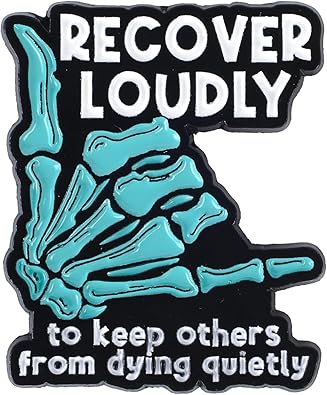















This is an amazing gift for one of your girls or for yourself. Love love love this!

This is honestly one of my go-to's for gifts. I have purchased it for both of my neices, my sister, my friends, my mom and every single one of them raved about it.





More From Sam
Overcoming Adversity: How My Lowest Moments Forged My Strongest Self
The Collapse — When Everything Fell Apart There’s something about difficult times that strips you to your bones. Overcoming adversity is never easy, but what is in these times. I remember standing in a difficult situation that no one prepares you for — the kind where...

The Ember Theory Series — Part 2: What to Do When Life Falls Apart
Before we go any further, if you haven’t read the first part of this series, I highly recommend starting there. In Part 1, I share the...
The Ember Theory Series — Part 11: Turn Pain Into Purpose (The Ember Advantage)
Before we go any further, if you haven’t read the first seven parts of this...

0 Comments