

BEFORE WE GET STARTED…
Check Out Our Alternative Wellness Digital Products
Our alternative wellness digital products are designed for people who don’t fit into rigid systems, one-size-fits-all healing, or surface-level spirituality. They blend modern neuroscience, nervous-system awareness, and New Age spirituality into grounded, usable tools you can actually integrate into daily life. From guided practices and sensory-based meditations to journals, trackers, and experiential workbooks, each product is built to support real spiritual growth—not perfection. These aren’t passive downloads meant to sit untouched; they’re interactive resources created to help you move through resistance, build self-trust, and take meaningful action in your spiritual journey, one small step at a time.


Alright!
Let’s get real. This isn’t your typical addiction recovery blog post.
They all had their opinions. Family members, old friends, even some medical professionals I saw in the depths of it. The looks, the unspoken verdict: You’re a lost cause.
My journey through drug abuse wasn’t just about substance use disorders. It was a soul-sickness. Every hit, every shot, was a scream into a void, a desperate attempt to feel a sense of connection or numb the pain of not having one.
I tried to white-knuckle it hundreds of times, failing over and over. I sat in church services because of my religious background, but it felt hollow. I heard about the founders of Narcotics Anonymous and their concept of a higher power, but I couldn’t get past my own hang-ups.
The 12-step program and other recovery programs talk about a spiritual awakening. For me, that phrase felt too big, too vague.
My breakthrough came when I stopped trying to have a grand spiritual experience and instead, decided to use every single doubt, every untrue negative comment or correlation anyone ever had about me as fuel.
Somehow after two decades of failing miserably on repeat; it worked. It worled when NOTHING else did.
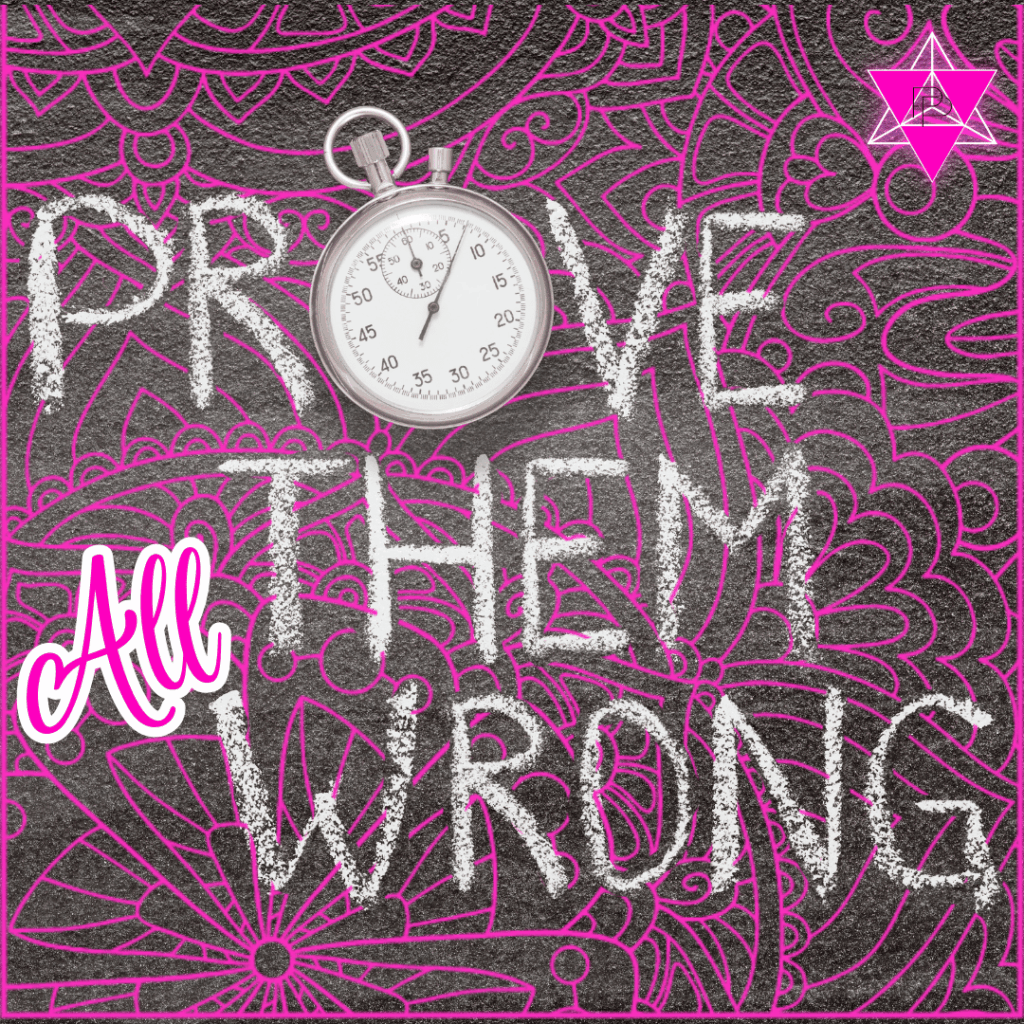
I call it the Prove Them All Wrong Framework. It’s not about anger; it’s about sacred defiance. It’s where personal responsibility meets spiritual healing.
Here’s the hard truth I learned: Addiction is a brain disorder. Science shows us the role of the nucleus accumbens, the agony of withdrawal symptoms, but do we really need qualified healthcare providers, medication-assisted treatment, and in effective treatments?
This personal experience (not fact-based) content is not professional medical advice. Always seek the place of the advice of your physician for any medical conditions. But treating just the brain disorder, without addressing the spiritual void, left me dry, brittle, and at risk. After years on furlough and house arrest in a small town of the same meetings became soemwhere I went to sell drugs, which is horrible. Trust me I know. For me, NA and AA was not enough, though it works for millions it didnt work for me.
The spiritual needs are real. It’s about that hunger for inner peace, for a quality of life that’s more than just being clean. It’s about building inner strength from a new source, something we have never experienced before.
The Prove Them All Wrong Framework (Up Close & Personal)
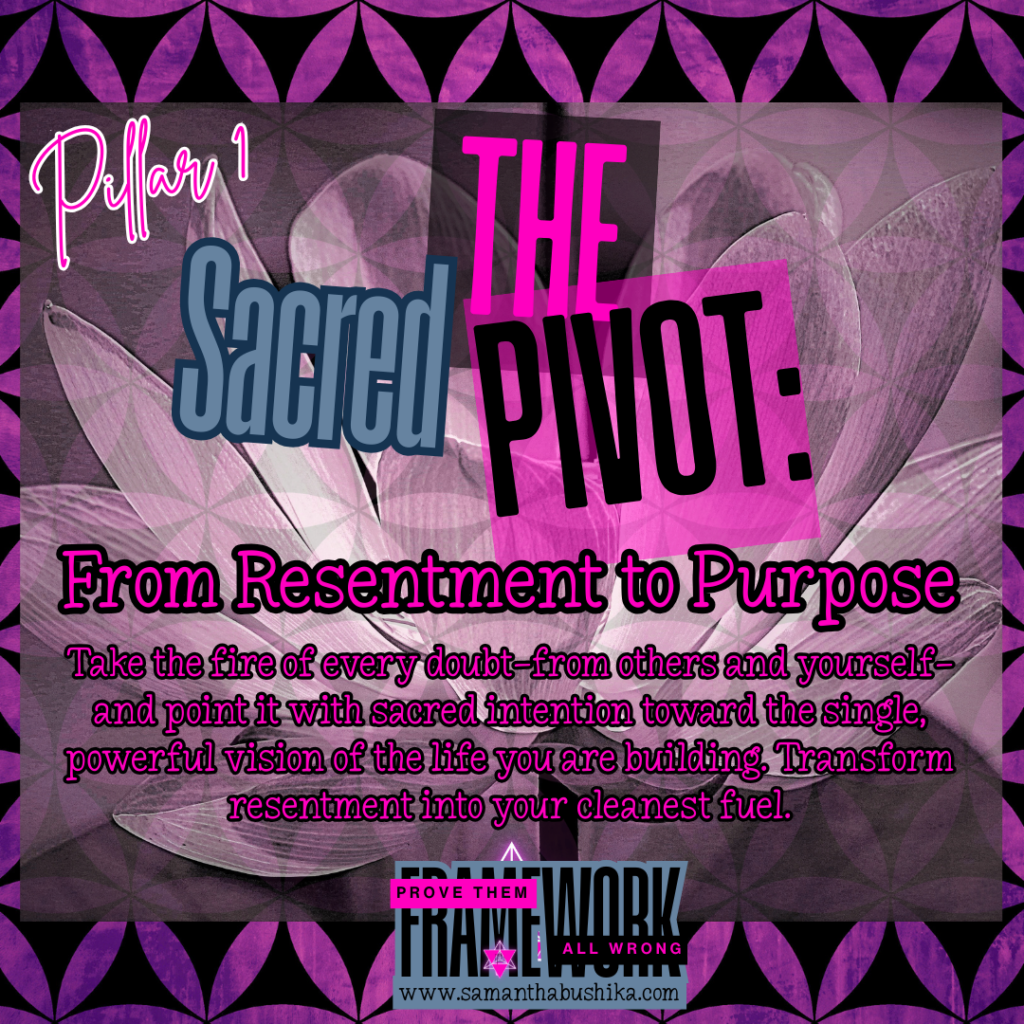
Pillar 1: The Sacred Pivot: From Resentment to Purpose
Resentment is powerful energy. Anyone who has lived through addiction knows this intimately. The resentment toward people who gave up on you, the professionals who reduced you to a diagnosis, the family members who quietly mourned you while you were still alive—and the resentment toward yourself for confirming every fear they had. I know all about resentments.
For years, that resentment burned me from the inside out. I tried to suppress it, spiritualize it away, forgive it before I had earned the right to, even though I can’t hold a grudge to save my life. None of that worked. Suppressed resentment doesn’t dissolve—it rots. Especially when your like me and aren’t even aware its festering.
The Sacred Pivot happens when you stop trying to destroy that energy and instead reclaim it.
I didn’t turn resentment into bitterness. I turned it into fuel. Every doubt became evidence of how radical my transformation would have to be. Every “you can’t” became a direction arrow pointing toward who I was determined to become. My higher power stopped being something external I had to believe in and became something internal I had to build.
This is where purpose is forged—not gifted. Purpose isn’t found through inspiration alone; it’s born through defiance, discipline, and direction. When resentment is alchemized into purpose, it becomes sacred. It no longer poisons you. It powers you.
That pivot is often the first real step in recovery—because it’s the moment you stop surviving and start aiming. One of the most essential steps in doing so for me to keeping an open mind even if coming from an angle of pure skepticism.
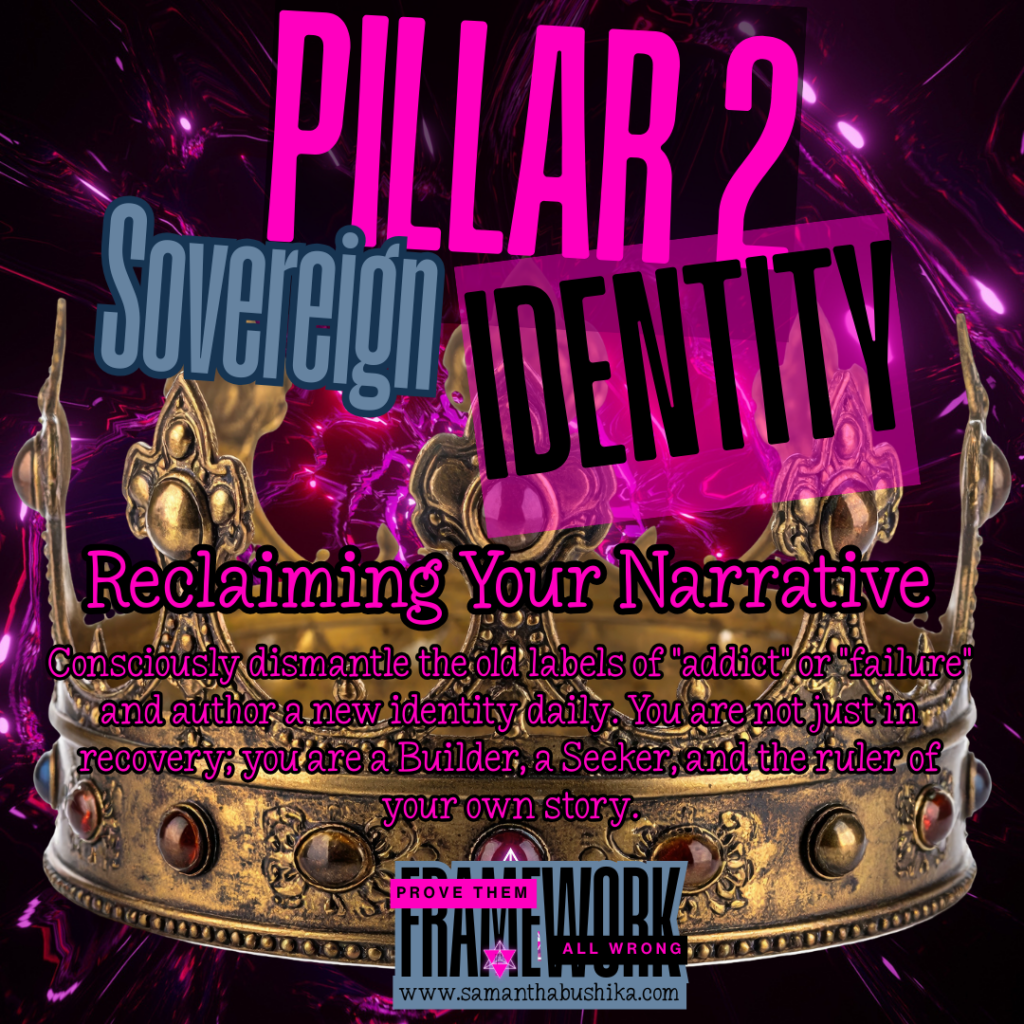
Pillar 2: Sovereign Identity: Reclaiming Your Narrative
Addiction strips identity before it destroys behavior.
Long before substances take everything else, they take the story you tell about who you are. You become a diagnosis. A liability. A problem to be managed.
Even recovery spaces, often unintentionally, can reinforce this by anchoring identity to symptoms instead of sovereignty, and other professionals contribute to feelings of inadequacy and inferiority such as state’s attorneys, police officers, or correctional officers.
This exact scenario contributed to my decades long revolving door of incarceration.
Sovereign Identity is the reclamation of authorship.
It’s the moment you stop seeing yourself as “someone with addiction” and start seeing yourself as someone with a story still being written. It’s the refusal to let your past define your capacity for growth. It’s recognizing that your experiences—especially the painful ones—contain intelligence, wisdom, and earned authority.
For me, this meant dismantling every inherited narrative:
- That I was broken.
- That I lacked willpower.
- That I would always need to be managed.
- That I couldn’t be trusted with my own life.
- That I would never change.
- That I wasn’t worth it.
- That I would be the next fatal overdose.
- That I would never amount to more than being a drug dealer,
- and you get the idea.
Instead, I integrated spiritual practices that served me, not ones I was told I should believe in. Mindfulness wasn’t about escaping my thoughts—it was about learning to sit with them without obeying them. Reflection wasn’t about guilt—it was about clarity. Growth wasn’t about becoming someone else—it was about reclaiming myself.
Sovereign identity is the backbone of spiritual recovery. Without it, everything else collapses under pressure.
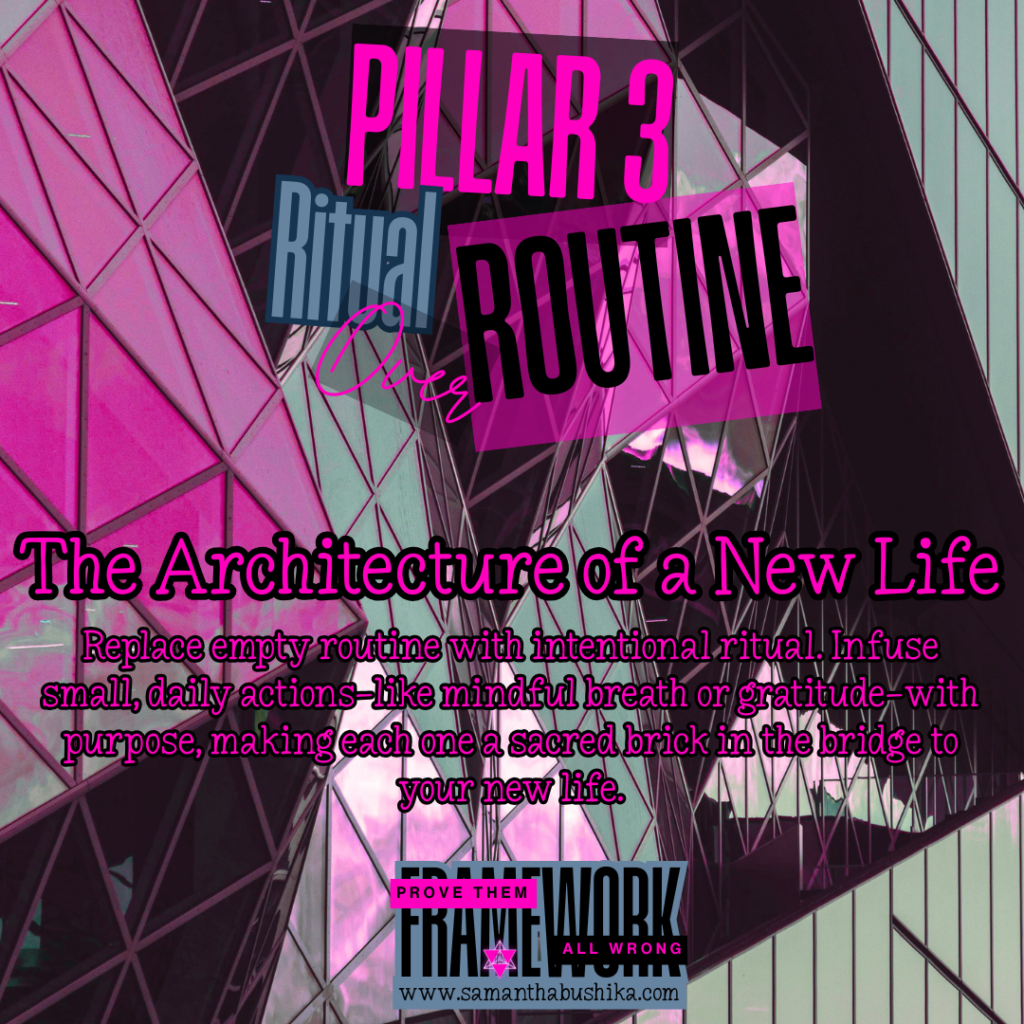
Pillar 3: Ritual Over Routine: The Architecture of a New Life
Routine keeps you functional.
Ritual makes you resilient.
During addiction, my days were chaotic but predictable. After sobriety, I initially tried to replace that chaos with discipline alone—strict schedules, rigid rules, white-knuckled structure. It worked temporarily, but it was brittle. One emotional hit and everything cracked.
Ritual changed that.
Ritual is routine infused with meaning. It’s the difference between “something I have to do” and “something that holds me.” My morning meditation wasn’t about relaxation—it was about orienting myself toward who I was becoming. Writing wasn’t journaling—it was witness. Silence wasn’t emptiness—it was recalibration.
Rituals become armor in difficult times. They anchor the nervous system. They remind you who you are when life tries to pull you back into old patterns. And most importantly, they’re chosen, not imposed.
Spiritual recovery becomes sustainable when your daily life is architected with intention. Brick by brick. Practice by practice. Not as punishment—but as protection.
Pillar 4: The Witnessed Journey: Finding Your True Tribe
Addiction thrives in secrecy. Recovery requires witness.
You cannot heal in isolation—not because you’re weak, but because transformation needs reflection. We don’t fully believe in our own becoming until someone else sees it and names it back to us.
You can be like I was and deny this, but my denial really ultimately prolonged my suffering. Even now I won’t admit to needing anyone for anything, so yeah- I took big issue with having to admit that I needed external validation and encouragement from others, but that didn’t change the fact that I most definitely did or that it was so foreign to me that it actually worked.
The Witnessed Journey isn’t about crowds or applause. It’s about safe mirrors. People who don’t collapse when you’re honest. People who don’t romanticize your pain or reduce your growth. People who can hold complexity.
For some, that witness is found in a 12-step fellowship, as we discussed earlier. For others, it’s therapy, a small circle of trusted friends, or mental health professionals who understand both trauma and possibility.
For me, it was a mosaic—different people at different times, each reflecting a piece of the truth I was learning to embody. You would not believe the power that this one thing held for me and my future.
Being witnessed stabilizes identity. It keeps you accountable without shaming you. It anchors progress when self-doubt flares. And when you forget who you are—as we all do—your tribe remembers for you.
No one builds a new life alone. They build it with witnesses. I would highly recommend those witnesses are not people who were friends throughout your addiction or people that you knew at all before. These should be people you are just beginning to know as your new self or maybe positive, drug-free family members.
I am not going to tell you this part is easy. We aren’t the ebst at going out and building a completely new network of people. I still haven’t found my tribe. I have my best friend and he lives with us when he is sober and doing well as he is now. (Fingers crossed.)
My spiritual awakening has been and is one of the lonliest experiences of my life, but if I am to be honest with myself- I need it. I still have no idea who I am or what I enjoy. Give that a try. Ask yourself, ‘what do I enjoy and want to do that will make me truly happy in my life today?’
I still can’t answer this question and that is why I haven’t earned my tribe yet. This is my path to shadow work, self-mastery, and divine timing. Just hang in there, keep working on yourself, and know that I am here for you and I mean that from the bottom of my heart.
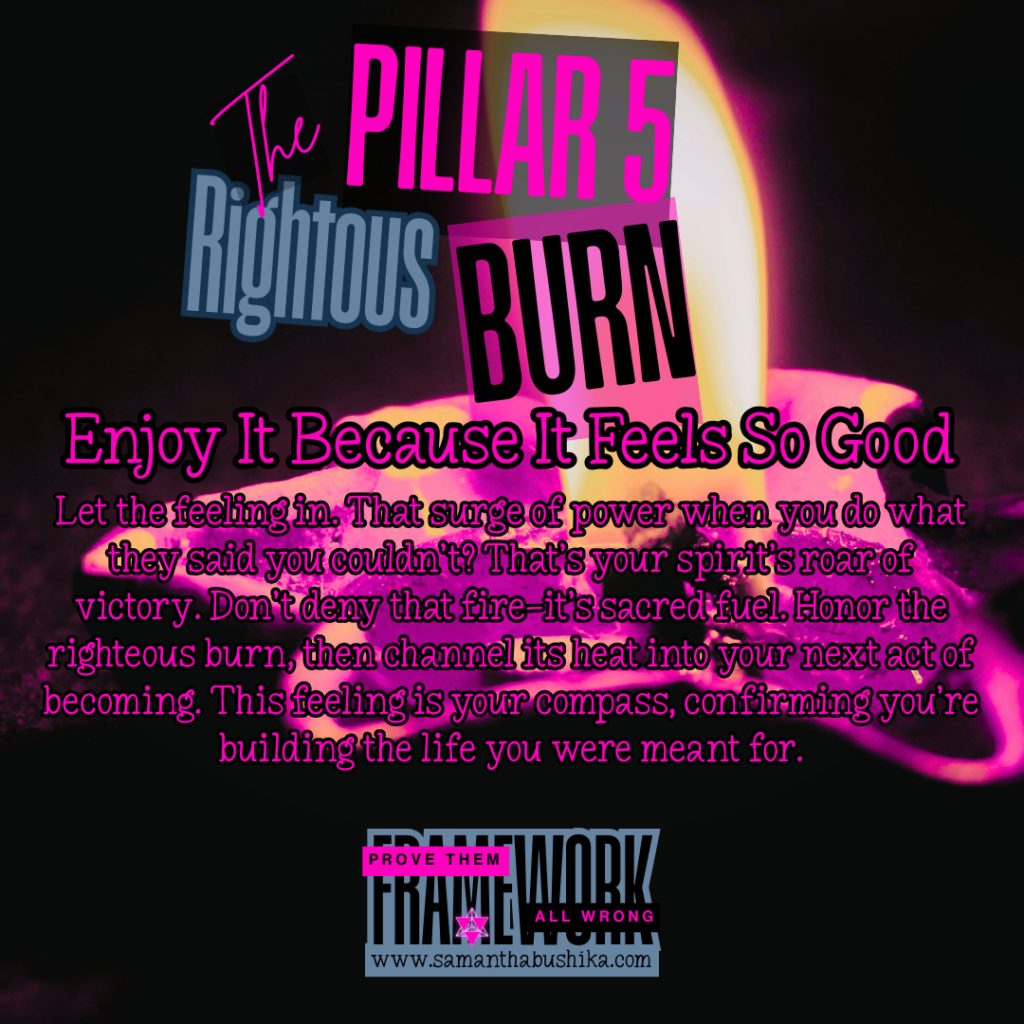
Pillar 5: The Righteous Burn: Using Validation Without Becoming Addicted to It
This part matters more than people admit, and thats okay.
There is a moment—often quiet, often unexpected—when you realize you’ve crossed a threshold they never thought you would. You respond differently. You handle pressure with steadiness. You live a peaceful day in a life that was once chaos.
And it feels good. God, does it feel fan-freaking-tastic!
That feeling—the righteous burn—is not ego. It’s recognition. It’s your nervous system registering safety and capability at the same time. It’s your spirit acknowledging victory.
For years, we were buried under verdicts and opinions. That burn is the sound of rubble shifting.
The danger isn’t feeling it. The danger is denying it—or chasing it. When honored properly, validation becomes fuel, not fixation. You don’t live for their approval. You let the truth of your transformation register fully in your body, then you use it to move forward. No need to highlight it or announce what your doing. I promise, baby, they know. It becomes a power so intense it drives you forward in a way nothing else can.
Most would label it a replacement high or an ego boost thing and to stuff it or just get rid of it, but not me. I am telling you to privately marinate in it, enjoy it, FEEL it becausse you have worked so hard to get here after a life with so, so much pain and suffering, with people constanlty tearing you down, that you need to know and understand that YOU, my dearest friend, did THIS! You did it.
You have successfully proven them all wrong! Whether your accomplishment is the biggest, or the smallest, it does not matter. This is not something you have to rub into faces or point out at all. We keep it classy, lovey, and, for me, after my small accomplishemnts and people’s surprise at my smallest successes I was able to tap that (lol- tap that) and use it to drive me to bigger and bigger successes, and I am not even close to being done yet.
It is more powerful than you can imagine. I say: use it. Don’t listen to the hype that its unhealthy or unbecoming. I say as long as we revel in privacy and it continues to drive us to FEEL the FEELS of PROVING THEM ALL WRONG, because you have earned it, but again privately and respectfully, never rubbing it in. If you rub it in it steals the power and you will need it all moving you to your next successes.
Taste it. Acknowledge it. Then pivot it back into action and USE it.
That burn is your inner strength speaking. It’s evidence that the work is working, and if used properly it will continue to provide.
Why I Needed a New Framework
The Bridge I Couldn’t Find—So I Built My Own
For years, I believed I had to choose between two opposing paths.
On one side was the clinical, fact-based world of addiction treatment centers, medical professionals, and evidence-based care. I agree with this path completely. Addiction is real. Trauma is real. The brain, the nervous system, and physiology matter. Today, we finally understand addiction as a brain disorder shaped by neurochemistry, trauma, and learned behavior—but that understanding came far too late for many of us. In my day, I was often refused treatment, misunderstood, or dismissed. The system wasn’t built to hold people like me.
Even when clinical care helped stabilize my body temporarily, it never touched the deeper fracture. I wasn’t just dysregulated—I was disconnected. Managed, maybe. Labeled, definitely. But not healed.
On the other side was traditional organized religion. And this is where I made a clean break.
I am not anti-spiritual. I am anti-control.
Organized religion, as I experienced it, felt like a massive farce—less about liberation and more about obedience. Less about truth and more about hierarchy. It didn’t feel effective, honest, or
expansive. It felt rigid, selective, and incomplete. And the more I questioned it, the clearer it became: this system wasn’t designed to heal people—it was designed to manage them.
I don’t believe humanity was given the full story. I believe much has been withheld, altered, or censored. History, as we’re taught it, is written by those who benefited most from controlling the narrative. Those who came before us were not benevolent guides—they were power-holders. And power, when concentrated, lies. Always.
So I stopped trying to fit myself into systems that required silence, shame, or submission.
And I forged my own path.
That path looks like what some would call New Age spirituality—but to me, it’s simply truth without permission.
It’s a belief in the Earth.
In nature and the elements.
In intuition as intelligence.
In the power of the human mind.
In kindness, love, and compassion without judgment.
In supporting all living things, not ranking them.
It’s an open mind instead of a closed doctrine.
Curiosity instead of fear.
Direct experience instead of secondhand rules.
I stopped outsourcing my morality, my healing, and my sense of meaning to institutions that never lived my life.
And here’s the part that matters most:
It worked.
Not symbolically. Not spiritually bypassed. Not “someday.”
It worked in my nervous system.
It worked in my behavior.
It worked in my recovery.
It worked in my ability to stay present, grounded, and alive.
I no longer had to choose between science and spirit.
I integrated both—on my terms.
I respected the brain and the soul.
The body and the mind.
Responsibility and compassion.
This framework exists because neither of the old paths could hold the whole of me.
One ignored meaning. The other ignored biology. And living between them nearly destroyed me.
So I stopped choosing sides.
I chose myself.
And in doing so, I found a way of living that doesn’t require belief in authority, fear of punishment, or blind obedience—only awareness, intention, and truth.
That’s the bridge.
That’s the path I forged.
And that’s why it worked.
Because these pillars weren’t borrowed from a book, a doctrine, or a system designed to manage people. They were built through trial, error, and lived experience—through paying attention to what actually changed my nervous system, my thinking, my behavior, and my relationship with life itself, after years of failing on repeat no matter how hard I tried.
I chose something with a negative cannotation (the feeling of proving them all wrong) because it not only resonated, but it freaking worked. I now thank the people that beat me down my whole life because they helped me create this framework, and if it worked for me, by golly, it can work for ANYONE.
They work because they address the whole human being.
Not just the brain chemistry.
Not just belief.
Not just behavior.
Addiction doesn’t live in one place, so recovery can’t either.
How the Pillars Work (Mechanically and Energetically)

Each pillar targets a different layer of healing—biological, psychological, emotional, spiritual, and relational—without forcing them into competition with one another.
The Sacred Pivot works because it stops wasting energy.
Anger, resentment, defiance, and grief don’t disappear when ignored. They either turn inward or turn destructive. This pillar redirects that raw force into purpose. It transforms “I’ll show them” into “I’ll build something undeniable.” Energy that once fed addiction becomes fuel for creation.
Sovereign Identity works because addiction strips authorship.
Long before substances take control, identity collapses. You become a problem to solve instead of a person becoming. This pillar restores agency. You stop outsourcing your worth, your morality, and your future. You become the authority of your own life again—and that shift alone changes behavior.
Ritual Over Routine works because the nervous system learns through repetition, not inspiration.
Routine keeps you functional. Ritual keeps you regulated. When practices are infused with meaning—rather than obligation—they stabilize trauma patterns and create internal safety. Ritual becomes structure that holds you when willpower runs out.
The Witnessed Journey works because isolation is the breeding ground of addiction.
We don’t solidify identity in a vacuum. Healing requires reflection—safe people who can witness your growth without controlling it, minimizing it, or romanticizing your pain. This pillar anchors change in relationship, where it can last.
The Righteous Burn works because progress must be embodied.
Change becomes real when the body recognizes it. That surge of “I handled that differently” or “they were wrong about me” isn’t ego—it’s integration. When acknowledged consciously, it teaches the nervous system that a new identity is now safe to inhabit.
Why the Pillars Must Exist Together
Remove one pillar and the structure weakens.
Purpose without identity collapses under pressure.
Identity without ritual drifts.
Ritual without witness becomes brittle.
Witness without sovereignty turns into dependency.
Validation without grounding becomes another addiction.
Together, the pillars create a closed loop of reinforcement. Each one supports the others. Each one protects against relapse—not just into substance use, but into old ways of thinking, relating, and abandoning yourself.
Why This Works Where Other Systems Didn’t
This framework doesn’t demand belief in authority.
It doesn’t require submission to institutions.
It doesn’t deny science or dismiss intuition.
It doesn’t bypass pain or glorify suffering.
It integrates what actually works:
-
The reality of the brain and nervous system
-
The power of meaning and purpose
-
The intelligence of intuition
-
The stabilizing force of ritual
-
The necessity of connection
-
The dignity of self-authorship
It allows anger without shame.
Questioning without exile.
Healing without obedience.
It works because it treats recovery not as compliance—but as construction.
You are not fixing what’s broken.
You are building what was never supported.
That’s how the pillars work.
That’s why they work.
Where To Start
This isn’t about dogma.
It’s about utility.
Frameworks fail when they demand belief before proof. This one doesn’t. It asks for participation, not perfection. These first steps are intentionally simple—not because the work is small, but because small, intentional actions are what rewire lives.
You are not being asked to overhaul everything. You are being asked to begin consciously.
1. Audit the Doubts: Turning Verdicts into Direction
Addiction, trauma, and long-term struggle leave behind a trail of verdicts—spoken and unspoken. From family members. From professionals. From society. And eventually, from ourselves.
“You’ll always be like this.”
“You can’t be trusted.”
“You’ll never finish anything.”
“You don’t get to have that kind of life.”
“You said that last time.”
These verdicts don’t just hurt emotionally—they shape identity. And identity shapes behavior.
So write them down. All of them. Even the most painful ones. True or not.
Not to relive them. To externalize them. You are taking away their power.
Then do the second, more important part, and I know this one seems redundant, but this isn’t a vision board.
Write everything that challenges their negative statements about you, in present-tense. Everything that you want in your life that would prove them wrong.
Not a fantasy.
A felt future.
A life with inner peace.
Stability. Purpose. Self-respect. A quality of life that makes relapse irrational, not heroic.
For example, “you can’t be trusted,” would be challenged with, “My life is filled with people that love and trust me.”
For “You said that last time,” you would challenge it with, “I am dependable, reliable, responsible, and I always keep my word.” This is your Prove Them All Wrong (PTAW) Audit, and its only for you so add whatever feels right. Thats what I do instead of wondering if your doing it right just do what feels right. This is your framework, and it has to work for you. Nobody else, just you.
This PTAW Audit becomes your compass.
When things get confusing—and they will—you don’t ask, “What should I do?”
You ask, “Which direction points toward that life?”
That’s utility, and that is where real progress lies.
2. Design One Ritual: Building Spiritual Growth Brick by Brick
Do not try to change everything.
Choose one small thing, done with intention, for your spiritual growth.
- Five minutes of quiet.
- A walk without your phone.
- Writing one honest paragraph in the morning.
- Sitting with your breath instead of numbing.
- A five minute guided meditation daily.
- Practice five minutes of gratitude.
- Talk a walk in the woods.
- Sit with a beautiful old tree, place your hand upon it, and see what comes.
- Spend time with crystals and herbs.
- Start growing plants in your house.
- Give plants you have grown to friends and family.
- Start smiling at strangers.
- Do one random act of kindness a day.
- Give back by donating round ups to support charitable causes that matter to you.
- Record yourself voicing with passion a list of meaningful affirmations, and listen daily. (I used this one to quit smoking.)
This is not about productivity.
It’s about regulation.
Ritual works because the nervous system learns through repetition. Trauma fragments time. Ritual repairs it. When something is done daily, gently, with meaning, it teaches your system: I am safe enough to stay present.
There probably isn’t one thing on this list that you have done while actively using. There just isn’t time for rituals when we are in that place, especially healthy ones.
That’s where real spiritual growth happens—not in grand moments, but in consistency without force.
This is not a habit to track or perfect. It’s a signal to your body and mind that you are choosing yourself, again and again.
Over time, these small rituals become the scaffolding of a new spiritual life—one grounded in lived experience, not belief alone. I think you will be pleasantly surprised how fast good things will start happening. One of my biggest game changers is when I realized that my outer world is a direct reflection of my inner world.
3. Find One Witness: Making the Inner Commitment Real
Healing does not happen in isolation.
It stabilizes through witness.
Find one safe person. Not someone who will manage you. Not someone who will judge or try to control the outcome. Someone who can simply hear you and hold the truth of your intention. I always recommend to my clients that it should be someone who isn’t from your past but that you hope will be a part of your future.
This wasn’t easy for me because I lost half of my friends when I got sober and the rest when I purchased my home. I work from home, and I am lonely while surrounded by people 99% of the time, but I was patient.
My best friend ended up moving back in when he was released from jail, and yes, he is part of my past technically, but the way I see it is that the person he is today isn’t the person that I grew up with. Just like I am not the person I was. He has been failed by the system in the exact ways that I have been and we have both suffered a great deal of trauma resulting. We are both moving forward without looking back and using one another as our witness.
The reason I say that I recommend nobody from your past is because often times those are the people that harmed us/failed us/enabled us. It’s so much better for your experience when you move forward with your witness. The differences clients have shared between the two are make or break, so I caution because I care. I want this to work for you as well as it has for me and my clients. The best part is that its your witness, and your story. You make the rules. So, pick your witness… While heeding my warning.
Tell them what you’re building.
Tell them what you’re aiming for.
Tell them who you’re becoming.
This does something subtle but powerful: it moves the work from internal intention to external reality. It interrupts the old pattern of secrecy and self-abandonment. It gives your emerging identity a mirror.
You don’t need applause. You need acknowledgment.
One witness is enough to begin, and its okay if it takes a bit to find your guy. Until then, I’ve got you.


The Reality of the Healing Process
The healing process is messy. God, is it messy.
There is no straight line. No clean timeline. No universal formula. It requires confronting the nature of behavioral health conditions with clear eyes, an open-mind, and a courageous heart. It means facing relapse triggers, emotional regression, grief, anger, and doubt without romanticizing or denying them.
There are many treatment options. What works is deeply personal. Survey data and focus groups can inform future research, but they cannot replace lived experience.
Evidence matters—but so does meaning.
Structure matters—but so does autonomy.
This framework does not replace clinical care. It does not override professional guidance. It exists alongside it, filling the gaps that treatment alone often cannot reach: identity, purpose, and spiritual integration.
As I have mentioned and will continue to mention, my journey has been one of much trial and error. Not only for me, but for my clients over the years. Without my clients I would never have mastered this framework. It took all of us a great deal of trial and error before finding what worked, but once we nailed it success continues to flow.
Your journey is yours.
- Not your family’s.
- Not a program’s.
- Not a system’s.
- Not Mine.
This is not about fixing what’s broken.
It’s about building what was never supported.
And these first steps—simple, intentional, repeatable—are how a new life begins to take shape. One of my most game changing books is The Compound Effect By Darren Hardy. I can’t recommend this book enough.
To summarize: small changes add up to big results over time. It doesn’t sound or look like much, but damn….
Small, intentional changes—done consistently—reshape a life in ways that feel almost invisible at first. When you commit to improving even a fraction each day, those choices stack on themselves, quietly multiplying your growth over time. Just like interest compounds in a savings account, daily habits compound in your personal life.
What you repeat—whether supportive or self-sabotaging—gains momentum. This is why consistency matters far more than intensity. Brief, repeatable actions, like moving your body for a few minutes or reading a single page, create real, lasting transformation not because they are dramatic, but because they are sustainable. Over time, what once felt insignificant becomes the foundation of profound change.
It’s time to build the future of your wildest dreams, but for real this time.
Brick by brick.
With clarity.
With courage.
On your terms.
Final Word On This
…and maybe it worked because, for the first time in my life, I wasn’t chasing escape — I was chasing alignment.
There’s a difference.
For years, I ran from pain.
Then I ran from shame.
Then I ran from my own potential because I was terrified of failing at something that actually mattered.
But the day I decided to build a life that felt honest — not impressive, not perfect, not socially approved — everything shifted.
Proving them all wrong stopped being about them.
It became about finally proving something to myself.
I realized that the real freedom wasn’t in changing their minds. It was in changing the way I saw my own story. The whispers of my past didn’t disappear overnight, but they grew quieter every time I showed up for my present. Every healthy choice, every small step, every moment I chose growth over escape laid another brick in the foundation of a life that could actually hold me.
And here’s what I want you to hear, especially if you’re standing at the edge of your own bridge right now:
You don’t have to become a different person to move forward.
You just have to become more honest with the one you already are.
Healing isn’t about erasing your past. It’s about building a future that makes peace with it.
You might think your story is too messy, too complicated, too far gone. I used to think that too. But transformation isn’t reserved for the lucky or the chosen. It belongs to anyone willing to keep going — especially on the days when going forward feels slow, awkward, or invisible.
Hope doesn’t arrive like fireworks.
Most of the time, it enters quietly.
It looks like choosing not to give up when old habits call your name.
It looks like making one decision today that tomorrow-you will be proud of.
It looks like believing — even when doubt is loud — that your life is still unfolding in your favor.
I know what it’s like to feel like everyone expects you to fail. I know what it’s like to carry the weight of your own history like evidence against you. But here’s what I discovered: your past is not proof of your limitations. It’s proof of your resilience.
The bridge to your new life isn’t built in giant leaps. It’s built in daily acts of courage no one else sees.
And one day, you’ll look around and realize you’re no longer surviving the life you escaped — you’re living a life you actually chose.
That’s the moment when peace replaces pressure.
That’s the moment when you stop needing validation.
That’s the moment when the old doubts finally run out of places to hide. I know how you feel. You have nothing. You have spent your life losing, and you have lost so much that it has become your normal. When you think about the life of your dreams it is too overwhelming for you.
You think it will take too long to get where you want to be, and is it really even worth it. It is worth it and if your like me you might even realize that you no longer enjoy drug use, if ever you even did. You don’t. You’re getting older and time starts flying, and if nothing else aligns in this post than hear this. Pay attemtion now.
I spent two decades of my life addicted to IV heroin- back when it was actually heroin- and this got me stuck in a cycle of incarceration that took that twenty years from me. I was a drug dealer and aspired to be nothing more. I never wanted kids. I saw too may women destroyed in jail losing theirs. I had zero will power. I am nothing special. In fact, I am probably the opposite of special. I was a junky through and through and everybody knew it. My house was the first big heroin raid in my town and the first case of the Vermont Drug Task Force. Even I figured I would be checking out soon enough. It was a nightmare of an existence, but as sad as it is to say I was okay with it.
The day I had finally had enough for the last time I flushed the rest of my work down the toilet, walked out of my trap house apartment, and checked into a homeless shelter, at the age of thirty-five, with a 450 credit score, a correctional GPS around my ankle, and on Methadone, which took a full day to get per daily dose on the bus.
It was not a hopeful situation at ALL. I was also pregnant! Two years and some change later I purchased my own home which is now worth more than 350k. I had a second child, became a certified life coach, started my blog, began helping people, started writing my memoir, investing in cryptocurrency, started teaching others how to do the same, became a certified: Reiki, crystal, and sound healing practitioner and credit counselor.
I don’t have rich parents. I didn’t ask ANYONE for ANYTHING, and still don’t. Nobody came to my rescue. My baby daddy had a 400 credit score, as well. I repaired both of our credit by myself, moved into a one bedroom where our bedroom was the living room. We proved ourselves and the landlord gave us his best apartment, a three bedroom, two bath, three level victorian duplex. We lived there for a little more than a year and then I bought my house, and did in a little less than three years what most people can’t do in a lifetime.
I promise you that if I did it, ANYONE can, and I’m not just saying this. I even quit smoking cigarettes, and that was huge for me. I smoked my whole life nearly. Time goes by so much faster as we get older. It flew. I still can’t believe I am sitting here and living this life, doing what I love, even if I’m not making any money from this blog yet and still have to work- I help people and I guess time will tell. I am happier than I have ever been and in the best shape of my life at age 45. I feel like I am still in my twenties, but better. That has to count for something.
If you’re reading this, I want you to know something with absolute certainty: there is nothing too broken in your story to be rebuilt into something meaningful. Nothing.
Your next chapter doesn’t need to be perfect. Mine sure wasn’t.
It just needs to be intentional.
So take the step. Send the message. Start the plan. Say the truth. Ask for help. (I didn’t because I still have issues. Help is necessary, unless you have issues like mine.) Try again. Keep building.
Because the most powerful thing you can do isn’t proving someone wrong, even though it’s okay to use it to get you started.
It’s proving to yourself that your life is worth showing up for — every single day.
And when you do that long enough, consistently enough, lovingly enough, something beautiful happens.
You don’t just create a new life.
You become someone who finally feels at home inside it.
That’s what’s waiting for you on the other side of this bridge.
And you are so much closer than you think.
To Sum It Up…
The Prove Them All Wrong Framework

Pillar 1: The Sacred Pivot
Take the fire of every doubt—from others and yourself—and point it with sacred intention toward the single, powerful vision of the life you are building. Transform resentment into your cleanest fuel.

Pillar 2: Sovereign Identity
Consciously dismantle the old labels of “addict” or “failure” and author a new identity daily. You are not just in recovery; you are a Builder, a Seeker, and the ruler of your own story.

Pillar 3: Ritual Over Routine
Replace empty routine with intentional ritual. Infuse small, daily actions—like mindful breath or gratitude—with purpose, making each one a sacred brick in the bridge to your new life.

Pillar 5: The Righteous Burn
Let the feeling in. That surge of power when you do what they said you couldn’t? That’s your spirit’s roar of victory. Don’t deny that fire—it’s sacred fuel. Honor the righteous burn, then channel its heat into your next act of becoming. This feeling is your compass, confirming you’re building the life you were meant for.

Pillar 4: The Witnessed Journey
A Necessary Word:
If This Post...
If this post resonated with you or you would like to add or share something, please do so in the comments below. You know I love to hear from you. You could also support my work by liking, sharing, commenting, subscribing, following, and registering to join our free-of-charge, supportive, all-inclusive, judgment-free, meet-you-where-your-at online community where teachers learn. Learners teach all while working together to #provethemallwrong and #showthemwhatwecando.
In our support forums, you can give or receive support all on the same day. This community is for all of us who are more progressors, less perfectors. Addiction is not a prerequisite. All are welcome. This is a new, growing community, so please be patient. If there are any issues, please contact me at [email protected].
Post Off Quote
"Proving them all wrong isn’t about revenge; it’s about refusing to remain the person they underestimated."
– S. Bushika (Me)

Post Off Affirmation
I am no longer defined by the expectations placed on my past. With every grounded choice I make, I build a life that reflects my truth, my strength, and my growth. I don’t rise to prove others wrong — I rise because I finally know I was worthy all along.
Be Sure To Check Out Our
Digital Products
$5.11
$5.11
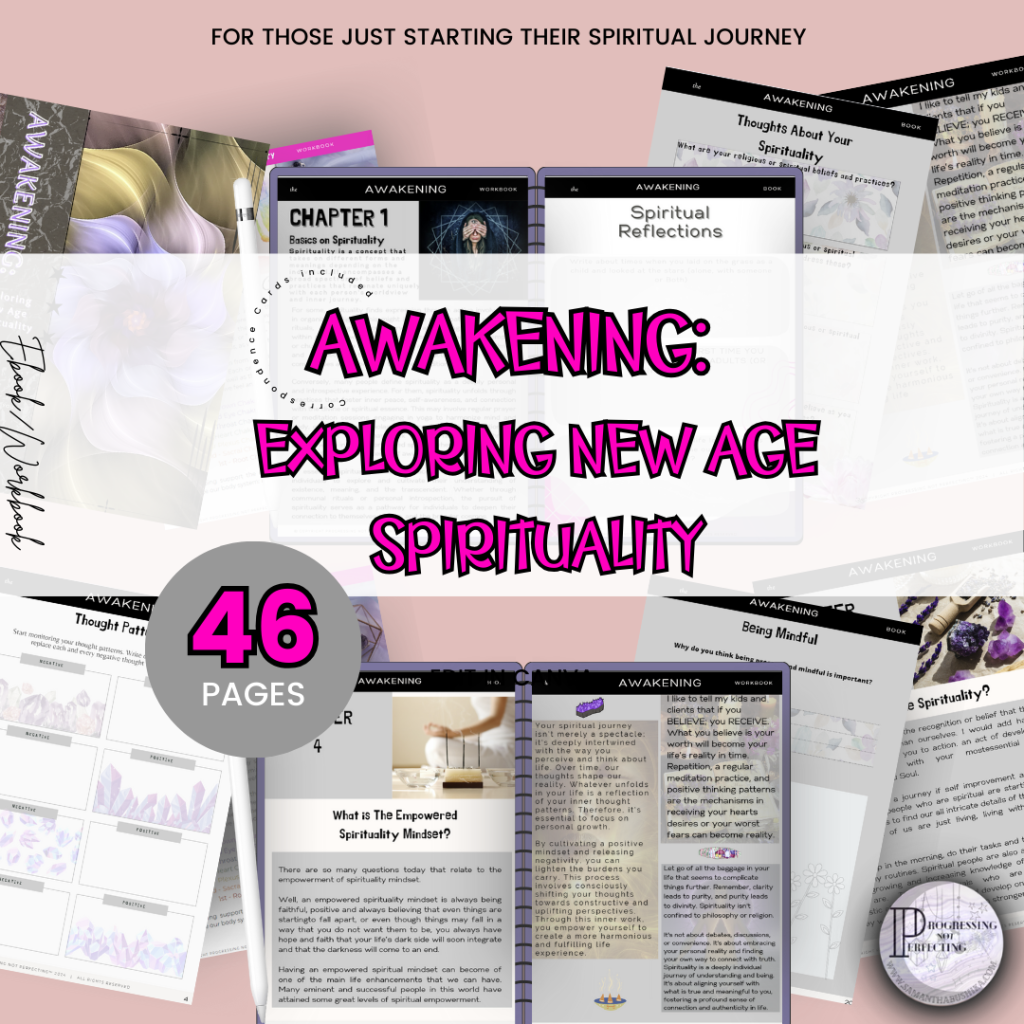
$4.11

$4.11
Hoodies
T-Shirts
Long Sleeves
Stickers
Testimonials
“Working with Samantha felt like talking to someone who truly understands struggle without judgment. Her words don’t just inspire — they meet you exactly where you are. For the first time in a long time, I felt seen, heard, and capable of real change. She has a way of blending honesty, compassion, and spiritual insight that makes growth feel possible instead of overwhelming.”
Angela Charlton
“Before finding Sam, I felt stuck in cycles I couldn’t break. Her perspective on healing and personal responsibility helped me reconnect with my power in a way no one else had. She doesn’t offer empty motivation — she offers grounded truth and practical steps that actually work. I’ve gained more confidence, clarity, and peace than I ever thought possible. Her and her lived experiences have motivated and empowered me beyond the words I have to explain. Thank you, Sam!”
Kason Espinosa
“What sets Sam apart is her ability to turn insight into action. She offers tools and reflections that help you apply what you learn to everyday life without overwhelming you. I’ve experienced lasting mindset shifts, stronger boundaries, and a deeper sense of purpose. Her authenticity makes her guidance incredibly powerful.”
Saif Guerra
Blog
From My Blog
My Life as a Female Drug Dealer Just Trying to Support My Habit
[pac_divi_table_of_contents _builder_version="4.27.2" _module_preset="623ded25-b556-47c4-a8a3-230bf09d491e" global_colors_info="{%22gcid-primary-color%22:%91%22title_container_bg_color%22%93}" default_state="closed" included_headings="on|on|on|off|off|off"...

Spiritual Procrastination: How ‘Waiting for a Sign’ is Actually Just Self-Sabotage in Disguise
For a long time, I believed I was doing spirituality right. I read the books. I did the spiritual practices. I waited patiently for signs, synchronicities, divine timing, and that elusive moment where everything would finally feel aligned. I told myself I was honoring...

How Ancient Texts Validate the Starseed Experience on Earth
[dsm_perspective_image...
Why Lightworkers Struggle with Addiction: 7 Hidden Reasons (And How Shadow Work Can Help)
[dsm_text_divider header="%22I thought being a Lightworker meant I was supposed to have my shit together.%22"...

The Law of Attraction Experiment That Ended My Addiction: A Raw Manifestation Success Story
[dsm_perspective_image src="https://www.samanthabushika.com/wp-content/uploads/2025/11/1-2-1024x1024.png" alt="The Law of Attraction Experiment That Ended My Addiction: A Raw Manifestation Success Story" title_text="1" _builder_version="4.27.4"...
Overcoming Adversity: How My Lowest Moments Forged My Strongest Self
The Collapse — When Everything Fell Apart There’s something about difficult times that strips you to your bones. Overcoming adversity is never easy, but what is in these times. I remember standing in a difficult situation that no one prepares you for — the kind where...
PNP | Samantha Bushika
Office
108 Elm ST #375 Bennington, VT 05201
Phone Number
+1 (785) 530-5259
Business Hours
10 AM – 6 PM Closed Sundays
Sign up to join your tribe and get our monthly newsletter:
Do you need some help?
You don’t have to have everything figured out before reaching out. Reaching out for support is a powerful first step toward change. Whatever you’re facing right now, you don’t have to carry it alone. This space exists to offer guidance, encouragement, and practical tools to help you move forward with clarity and confidence. Whether you’re navigating recovery, personal growth, or spiritual alignment, this is a safe, judgment-free space. Share as much or as little as you feel comfortable with — we’ll meet you where you are.
Extremely insightful post Samantha 🫶😇😇
Awwww… Thanks, Killa! I try. Glad my work is speaking to people. I hope you are well, my friend.