Your shadow has been
trying to tell you something.
ShadowSpeaks is a free, fully personalized shadow work experience built for the people who are done running from themselves and ready to find out what's actually been driving the patterns, the pain, and the cycles that won't quit.
This isn't a quiz. It isn't a list of affirmations. It's the real work — and it starts the moment you speak your truth below.
Speak It. Let Your Shadow Answer.
Type one honest sentence about what you're carrying right now. Your shadow will do the rest.
🖤 ShadowSpeaks
Your shadow isn't your enemy. It's been trying to tell you something. This is your chance to finally listen.
I Know What It Feels Like To Carry Something This Heavy.
I was fourteen years old when I came home to an empty apartment.
Not messy. Not chaotic. Empty. Every piece of furniture, every dish, every trace that a family had existed there — gone. Except my bedroom. My bedroom was left exactly as I had left it two weeks before.
I still don't know if that was cruelty or kindness. I've stopped trying to decide.
I cried that first night. The next night I decided I would not be a victim. That decision changed everything.
I stayed in that apartment alone until the landlord boarded the windows and changed the locks. And then I did something that still surprises me when I tell it: I gathered my people, and we built our own tour. 52 venues across that summer. 52 days camping, moving, living. The last show was Horde Festival. We saw Primus. To this day it was the best summer of my life.
And it started with being abandoned.
I'm not telling you that story so you'll feel sorry for me. I'm telling you because it is the most accurate picture I have of what shadow work actually does when you let it. It takes the thing that was supposed to destroy you and turns it into the origin story of something that couldn't have existed any other way.
But here's what I didn't know yet: resilience and wounds can live in the same body at the same time. I built that beautiful summer AND I carried the abandonment wound into my twenties, my thirties, my relationships, my choices. Both things were true. The shadow doesn't care how tough you are. It just waits.
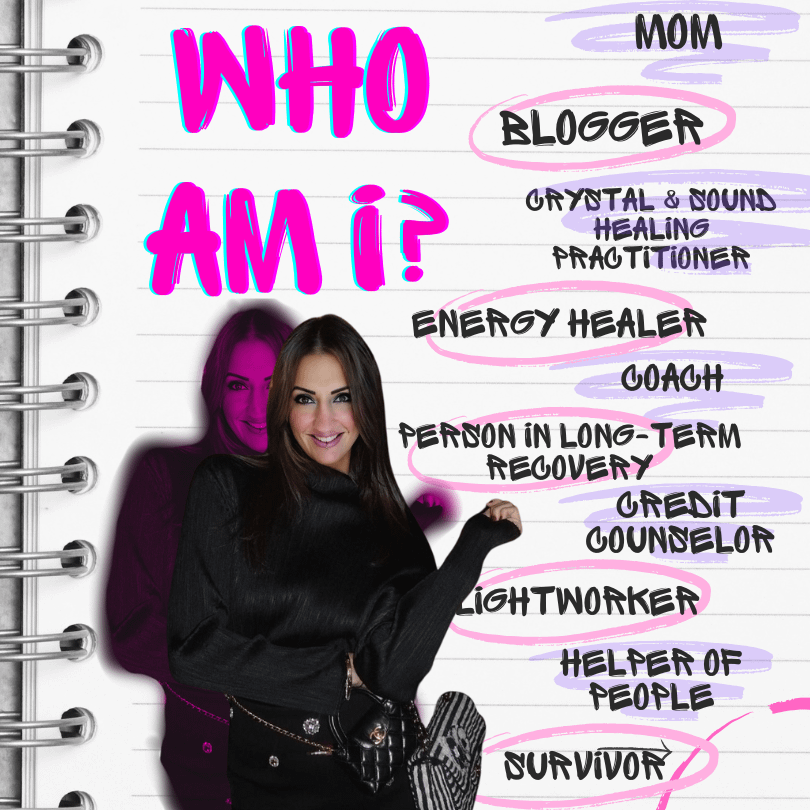
I began my real shadow work in June of 2019, at the beginning of my spiritual awakening. I was already a mother — and about to become one again. I was in recovery. I was looking at my life and trying to understand what had driven me to the places I'd been.
And I'm still doing it today.
Shadow work isn't something you finish.
It's something you practice — like breathing, like love, like staying.
What Shadow Work Actually Is
Shadow work is the practice of turning toward the parts of yourself you were taught to hide. Not fix. Not eliminate. Not apologize for. Turn toward.
The anger that comes out sideways. The hunger that's never really about food. The way you flinch when someone gets too close. The patterns you repeat even when you swore you were done. The version of yourself that comes out when you're scared — the one you're a little bit ashamed of.
That's the shadow. And it's not your enemy.
Most shadow work resources treat the shadow like a problem to solve. Like something dark that needs to be cleaned up and converted into light. That's not it.
The shadow is a messenger. It formed in response to real experiences — things that happened to you, things you felt, things you needed to survive. It didn't arrive to ruin your life. It arrived to protect it.
What's unexamined runs your life from the background.
What's integrated becomes your superpower.
The Shadow Self Explained
Your shadow formed before you had language for it. Before you could think in sentences, you were already reading the room — learning which versions of yourself got love and which ones made the adults around you uncomfortable.
And you were making decisions — unconscious, survival-level decisions — about which parts of you were safe to show. The rest? You buried. Not because you were weak. Because you were smart.
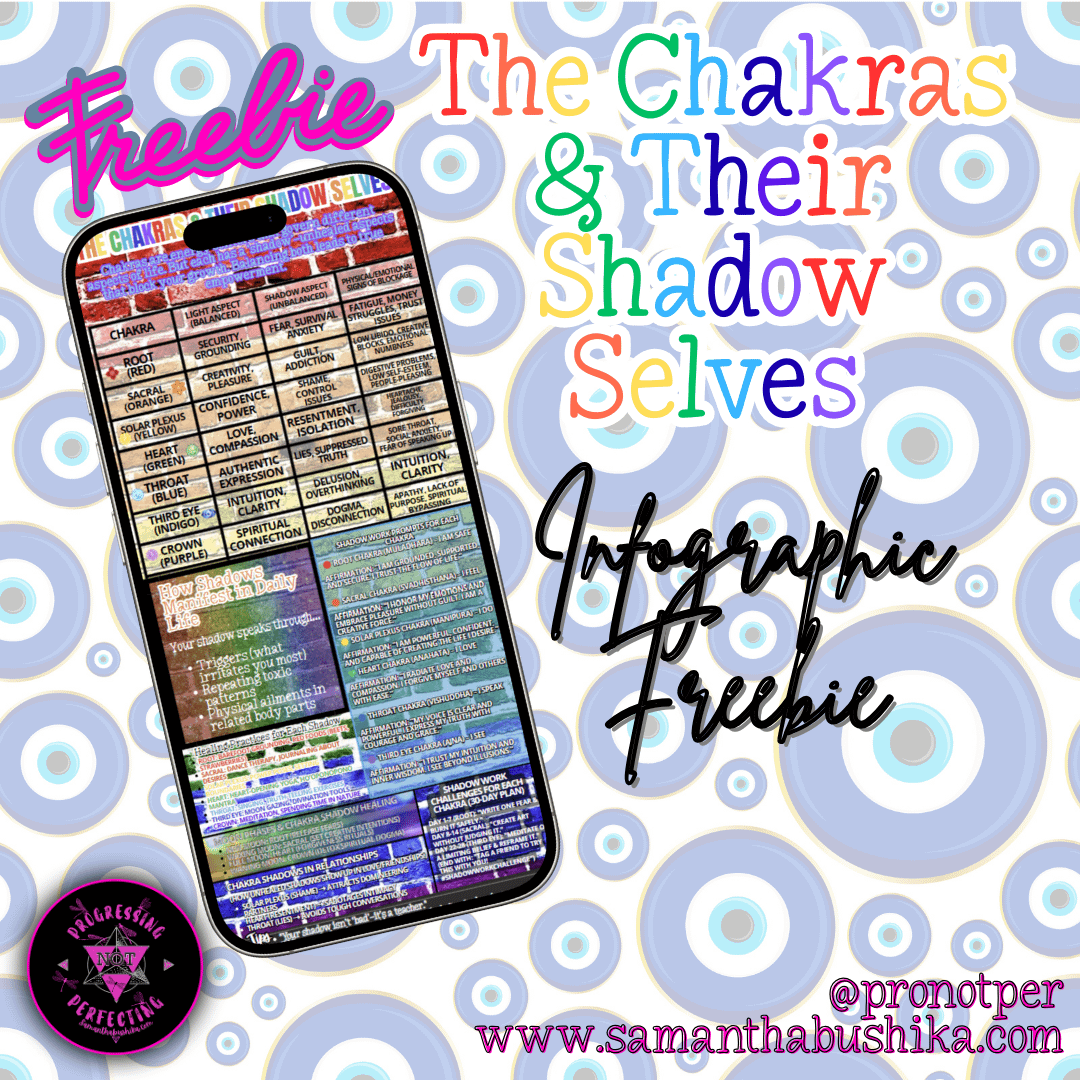
The shadow speaks through your triggers.
When something small sends you into a reaction that's disproportionate to the situation — your shadow is speaking. The trigger is never really about the trigger.
The shadow speaks through your projections.
When someone else's behavior sets you off in a way that feels intensely personal — especially qualities you'd never admit to having yourself — that's your shadow showing you something.
The shadow speaks through your patterns.
The same relationship dynamics, the same self-destructive cycles, the same walls that go up at the same moments. Patterns aren't random. They're the shadow running its old programming.
The shadow speaks through your body.
Tension that lives in your shoulders, a chest that never fully releases, a stomach that drops when someone gets too close. The body remembers what the mind has decided to move on from.
"Your triggers are a treasure map. Every overreaction is pointing directly at something that needs to be seen."
— ShadowSpeaksThe "My Mommy Never Loved Me" Syndrome
I coined this term years ago. Not in a clinical setting. Not from a textbook. I was living it — and I started seeing it in everyone around me who was also living it. In the recovery rooms. In the jails. In the relationships that kept falling apart in the same way. I called it what it was.
It doesn't mean your mother was evil. It doesn't mean she didn't try. It means there was a gap between what you needed and what you received that was so profound, so formative, so fundamental — that it created a wound that touches everything.
My mother was the hardest working woman I have ever known. She woke up at 4am to be at work by 6. She also partied all night, every night. My birthdays were her excuse to have her friends over until sunrise. At 16 she got me my driver's permit — not so I could learn freedom, but so I could drive her to bars in the next state and sit outside all night.
I'm not telling you this to villainize her. She was complicated. And I still carry the wound of what wasn't there. Both things are true.
How to recognize it in yourself:
- You work twice as hard to earn love that other people seem to receive just for existing.
- Intimacy feels like a threat even when you crave it.
- You either give everything or disappear — there's no middle.
- You're waiting for people to leave even when there's no evidence they're going anywhere.
- Part of you is still waiting to be chosen.
- You're fiercely independent in a way that secretly exhausts you.
You can carry a wound AND refuse to be defined by it.
Both are acts of radical self-awareness.
The moment I held my daughter for the first time, something shifted. The love I felt — immediate, overwhelming, unconditional — made me understand in a whole new way that my mother had never felt anything close to that for me. That was devastating. And it was clarifying. Because in the same breath I felt that grief, I made a decision I still make every single day: I will be different. I will do better. I will never stop growing.
That's not toxic positivity. That's shadow integration. The wound is still there. And I'm still here.
The 9 Most Common Shadow Patterns
Shadow patterns are the recurring behavioral and emotional signatures of your unexamined wounds. They're not character flaws. They're survival strategies that have outlived their usefulness. Read these slowly. More than one may land.
Shadow Work Journal — 136 Pages of Guided Prompts
Go deeper than a single reading can take you. Built for the real work.
Where Your Shadow Lives In Your Body
Shadow work isn't just a mental exercise. The shadow lives in the nervous system. In the muscles. In the gut. In the places that tighten when someone says the wrong thing.
Throat & Voice
Unexpressed truth. Words you swallowed. Emotions you weren't allowed to voice. If you struggle to speak your needs or say what's real — your throat has been holding it.
Chest & Heart
Grief, love, longing, and loss. A chest that never fully releases is carrying unexpressed sadness. The armor we build around our hearts is real — and it's felt there first.
Stomach & Solar Plexus
Shame and powerlessness. Your personal power center — and where shame lands hardest. The gut drop when you feel exposed. The nausea of self-doubt.
Shoulders & Upper Back
Burden. Responsibility that was never yours to carry. The weight of holding everyone else together while quietly collapsing inside.
Hips & Lower Body
Survival fear and generational trauma. The fight-or-flight that never got to complete itself. Chronic hip tightness often holds old fear the mind has long decided to move past.
Jaw & Face
Suppressed anger and forced pleasantness. The smile that doesn't reach your eyes. The anger you swallowed. The grief you smiled through.
Shadow Work & Recovery
I spent years in recovery before anyone mentioned the shadow. Addiction doesn't happen in a vacuum. It happens to people who are in pain — people who found something that worked, for a while, to quiet what was underneath.
Removing the substance without examining the shadow that drove you to it
doesn't heal the wound. It just removes the bandage.
When you remove the substance without examining the shadow — the shadow doesn't go away. It finds another outlet. A new pattern. A new cycle. Shadow work in recovery asks a harder question than most programs dare to:
"What was I trying not to feel?"
— The question that changes everythingShadow Work For Shame
Shame is not guilt. Guilt says: I did something bad. Shame says: I am something bad. Guilt can be addressed with action. But shame convinces you there is no action available. That you are the problem.
Shame lives in the shadow more than almost anything else. It's the wound that says you are too much and not enough simultaneously. That your story disqualifies you from belonging. And here's the cruelest trick shame plays: it tells you that the solution is to hide. But hiding is exactly what makes shame grow.
"Shame cannot survive being spoken in the presence of compassion. That's not poetry. That's how it actually works."
— ShadowSpeaksShadow Work For Abandonment
Abandonment is one of the oldest wounds. It doesn't always look like someone leaving. Sometimes it looks like someone staying but never really being there. Sometimes it looks like coming home to an empty apartment.
How abandonment lives in adult life:
- Staying too long in relationships that aren't working because leaving feels like being left.
- Leaving before they can leave you — preemptive abandonment.
- Feeling panicked when someone takes longer than usual to respond.
- Equating someone's bad mood with imminent rejection.
- Choosing people who are emotionally unavailable — because unavailable feels familiar.
- Being unable to be alone without it feeling like punishment.
The Shadow Integration Roadmap
Shadow integration is not linear. It doesn't follow a schedule. And it doesn't end with a moment of resolution where everything clicks and you're healed. Here's what it actually looks like:
Recognition
You start to see the patterns. The triggers make a kind of sense for the first time. You can't unknow what you know. That's not a problem. That's progress.
Resistance
The phase nobody talks about. When you start to see your shadow clearly, the ego pushes back hard. You might feel worse before you feel better. This is not regression. Stay in it.
Excavation
You go back. You look at where these patterns came from. You connect the dots between what happened then and how you operate now. This phase requires enormous gentleness.
Dialogue
You stop fighting what you find and start talking to it. You give the shadow a voice and you actually listen. This is where the real shifts begin.
Compassion
You start to understand where it all came from. The rage makes sense when you see what it was protecting. Compassion doesn't excuse behavior — it explains origin.
Integration
The shadow material stops running you from the background. You still have triggers. But now there's a gap between stimulus and response. In that gap is choice. That gap is everything.
Integration isn't about having no shadow.
It's about having a relationship with yours.
Journal Prompts By Wound Type
These prompts go underneath the story you've been telling yourself. Pick the category that makes you most uncomfortable. That's always the one to start with.
Abandonment & Attachment
- What does love feel like in my body — and what does the threat of losing it feel like? When did I first learn the difference?
- How early did I learn that people leave? What did I decide about myself when they did?
- Where in my current life am I pushing away what I actually want most?
- Write about a time you left before you could be left. What were you actually afraid of?
Shame & Identity
- What is the one thing about myself I most hope no one ever finds out — and where did the belief that it was shameful come from?
- If shame had a voice in my head, what does it say most often? Whose voice does it actually sound like?
- What parts of my story have I been editing out — and what would happen if I stopped?
- Write about the version of yourself you've never let anyone meet. What is she like? What does she need?
Self-Sabotage
- What good thing have I recently walked away from — and what was I afraid would happen if it continued?
- What story am I telling myself about what I deserve — and where did that story start?
- If I knew I couldn't fail AND I couldn't run, what would I build?
- What version of me would have to die for me to fully succeed? Am I willing to let her go?
Recovery-Specific
- What was I numbing — and what does that thing feel like now that I'm not numbing it?
- What emotions am I most afraid to sit with sober?
- What did the version of me that used feel about the version of me that doesn't?
- What did my addiction give me that I haven't yet found another way to access?
Want 136 more prompts like these?
The PnP Shadow Work Journal goes deeper than a page can. Built for the real work.
Meditations To Sit With
Read each meditation through once. Then close your eyes and move through it from memory — loosely, not precisely. Your nervous system knows the way.
Things About The Shadow Most People Don't Know
Your Shadow Brought You Here.
Don't Leave Without Going Deeper.
Get the complete ShadowSpeaks Shadow Integration Guide — free. 14 chapters, original rituals, meditations, journal prompts, and the full roadmap. Written by someone who walked through the fire and came out the other side.
No spam. No pressure. Just the real work.
SHADOWSPEAKS · GO DEEPER
You've named the shadow.
Now it's time to speak to it.
Reading about shadow work is the doorway. Actually walking through it, with someone who has lived every ugly, honest layer of their own, is the work. If something in you just sat up and said "okay, but what now?", that's not a coincidence. That's readiness talking.
Book a Clarity Call
One honest conversation to find out what's really underneath it all, and whether working together is your next right step.
Schedule My Free CallSee How We Could Work Together
Explore 1:1 coaching, programs, and the ways I support people doing this exact work, before you commit to anything.
Explore Work With MeAsk Me Directly
Not ready to book anything yet? Send me your questions first. A real human (me) reads and answers every email.
Email [email protected]Struggling financially? There's still a path for you.
Money should never be the reason someone stays stuck in the dark. I offer an income-based payment plan for coaching clients with limited means. To keep this option honest and sustainable for everyone who needs it, I do ask for proof of income, and all information submitted is verified before a plan is approved.
There's no application page or form for this, it's a real conversation, not paperwork. Just mention it on your clarity call, or email [email protected] with "More Info About Your Income-Based Payment Plan" in the subject line, and I'll personally walk you through what's needed.