
For a quick run down scroll down for FAQs (Frequently Asked Questions)
👇 Ember First 👇
The "21 days to form a habit" rule is a myth. Research shows it actually takes an average of 66 days for a new behavior to become automatic.
Habits are not stored in the thinking part of your brain. They live in the basal ganglia — the same system that controls breathing. That is why bad habits feel automatic. They literally are.
Missing one day of a new habit has almost no impact on long-term success. Missing two days in a row is where habits begin to unravel. Never miss twice.
Your environment shapes your habits more than your willpower does. Studies show that people who change their physical surroundings are significantly more likely to successfully build new behaviors.
Celebrating immediately after completing a habit — even something as small as saying "yes" out loud — measurably accelerates habit formation by triggering a dopamine response in the brain.
Research shows that attaching a new habit to an existing one — known as habit stacking — dramatically increases the likelihood that the new behavior will stick long term.
👇 Now: Catch Up 👇
Before we go any further, if you haven’t read the first seven parts of this series, I highly recommend starting there. In Part 1, I share the foundation of the Ember Theory and how it came to be, and in Part 2, we break down what to do when life falls apart. In Part 3, we address why you feel stuck and what that means. On to Part 4, where we talk about how detrimental having an open mind is, and was, for me on my journey. In Part 5, we discuss small steps to actually change your life. Part 6, I address how helping others helps you. Part 7, I share how to protect your energy and your ember, and that brings us to Part 8, where I share how to build new habits, and the rest you will just have to read to find out. 😁
👉The Ember Theory Series — Part 1: A New Philosophy for Rebuilding Your Life
👉The Ember Theory Series — Part 2: What to Do When Life Falls Apart
👉The Ember Theory Series — Part 3: Why You Feel Stuck (But You’re Actually Healing)
👉 The Ember Theory Series — Part 4: Growth Mindset (The Power of an Open Mind)
👉 The Ember Theory Series — Part 5: Small Steps to Change Your Life (That Actually Work)
👉 The Ember Theory Series — Part 6: Benefits of Kindness (Why Helping Others Heals You Too)
👉 The Ember Theory Series — Part 7: How to Protect Your Energy (Protecting Your Ember)
👉 The Ember Theory Series — Part 8: Core Values (How to Build a Life That Actually Fits You)
Discover Where You Are on the Ember Journey
Take Our Free Quiz To Find Out
You are not broken. You are not behind. And you are definitely not finished.
Whether you’re rebuilding after hardship, searching for purpose, feeling stuck, or sensing that you’re meant for more, the Ember Assessment reveals exactly where you are on your journey and what your next step should be.
In just a few minutes, you’ll uncover your current Ember Stage, identify hidden strengths and challenges, and receive personalized guidance to help you move from surviving to thriving.
Welcome to Part 9 Of The Ember Theory Series
“You don’t need more willpower. You need a better system. Willpower runs out. Systems don’t.
Quick Answer
Why Your Brain Is Not the Enemy — It's Just Wired Wrong for This
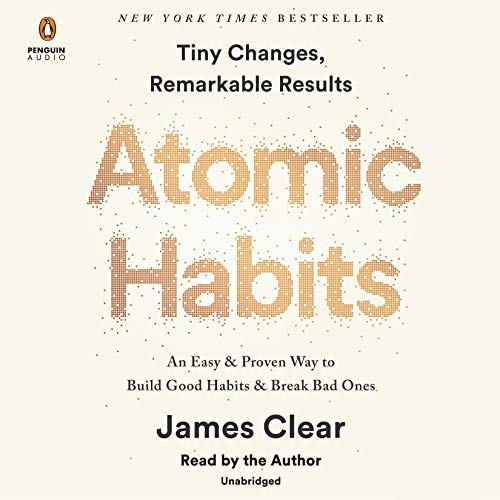
Grab the above mentioned books using my affiliate links below. If you use these links to purchase I earn a small comission that costs nothing for you but helps me to contuinue bringing you all of the best personal development and spiritual awakening content there is, and I cant tell you how much that means to me.


What the Science Actually Says About Habit Formation
Three things:
- How small you start
- How well you attach the new behavior to something that already exists in your daily life
- How quickly your brain receives a signal that the behavior was worth repeating
The Habit Loop — And Why Yours Keeps Breaking
They drag themselves out of bed. They do the thing. They feel nothing except exhausted and resentful.
whether to run it again.
Please Help Me Out And Support My Work By Following my New YouTube & TikTok Channels.


Why Survivors Have a Unique Advantage Here (That Nobody Talks About)
Here is something I figured out about myself that changed everything.
People who have lived through addiction, trauma, chaos, or long-term survival mode have spent years — sometimes decades — running incredibly powerful habit loops.
Not healthy ones. Not the kind that show up in a strategy guide. But powerful ones. Efficient ones. Loops so deeply grooved into the basal ganglia that they fired automatically without a single conscious thought.
That is actually a skill.
Not the content of the habits — the mechanism of them. The ability to build deeply automatic behavior through repetition under pressure is something many people never develop.
You already know how to build habits. You just built the wrong ones.
The behavior change work is not starting from scratch. It is redirecting a capacity you already have.
I know that reframe sounds almost too clean. But I have lived it.
I went from a habit loop built around using every single day — rituals, routines, automatic responses so ingrained I could run them half asleep — to building a morning routine that has not broken in years.
Same mechanism. Different program.
That is the pivot. Not willpower. Redirection.
How to Actually Build New Habits That Stick — Step by Step
The First Step — Make It Embarrassingly Small

The Second Step — Stack It on Something You Already Do
- After I [current habit], I will [new habit].
- After my cup of coffee, I will write one sentence in my journal.
- After I brush my teeth, I will do five minutes of physical activity.
- After I sit down at my desk for my lunch break, I will spend five minutes away from social media.
The Third Step — Create an Immediate Reward
The Fourth Step — Reduce Friction to Almost Zero
The Fifth Step — Protect the First Week Like It Is Sacred
The Identity Shift That Makes Everything Easier
Here is the part that nobody puts in their simple steps listicle, and it is the most important part of this entire post.
Habit change is not really about behavior. It is about identity.
James Clear makes this point powerfully in Atomic Habits — that the most effective behavior change starts not with outcomes or processes but with identity. Not “I want to exercise more” but “I am someone who moves my body every day.”
Not “I am trying to quit unhealthy habits” but “I am not the kind of person who does that anymore.”
That shift sounds small. It is enormous.
Because when your daily habits conflict with your identity — your identity wins every time.
But when your daily habits confirm your identity — they become effortless.
Every time you complete your habit — however small — you are casting a vote for a new identity.
You are not just building a new routine. You are building a new self-concept. And that self-concept — repeated through small actions, reinforced through positive reinforcement, compounded over the long term — is what produces real, lasting, unshakeable behavior change.
That is not motivation. That is not discipline.
That is the Ember Theory at work.
More From The Ember Series




Part 9: Your Reading it!
What to Do When You Fall Off (Because You Will)
- Never miss twice. One missed day is human. Two missed days is a pattern. Three missed days is the beginning of a bad habit of avoidance. The moment you miss — the very next day, no drama, no self-punishment, no elaborate re-launch — you just do the thing again.
- Lower the bar after a setback. If you missed three days of your morning routine, do not try to make up for it with a two-hour session. Do the smallest possible version of the habit. Reconnect the loop. Then build back from there.
- Adjust without abandoning. Maybe the time of day is wrong. Maybe the habit is still too big. Maybe you need a different cue. Adjust the strategy — do not declare yourself a failure and start over from zero.
The Habit Stacking Formula — A Quick Reference
1.
2.
3.
4.
5.
6.
7.
FAQ's (Frequently Asked Questions)
1. How long does it actually take for new habits to stick?
2. What is the easiest way to start building new habits?
3.Why do my good intentions never turn into good habits?
4. What is habit stacking?
5. How do I break bad habits while building new ones?
6. What role does identity play in building habits?
7. What is the difference between atomic habits and tiny habits?
A Final Note on Building Your New Habits
If This Post...
If this post resonated with you or you would like to add or share something, please do so in the comments below. You know I love to hear from you. You could also support my work by liking, sharing, commenting, subscribing, following, and registering to join our free-of-charge, supportive, all-inclusive, judgment-free, meet-you-where-your-at online community where teachers learn. Learners teach all while working together to #provethemallwrong and #showthemwhatwecando.
In our support forums, you can give or receive support all on the same day. This community is for all of us who are more progressors, less perfectors. Addiction is not a prerequisite. All are welcome. This is a new, growing community, so please be patient. If there are any issues, please contact me at [email protected].
Post Off Quote
"You do not rise to the level of your goals. You fall to the level of your systems. Build a better system — and the better life follows."
– Me
Post Off Affirmation
I am not starting over. I am starting with everything I have already learned. And this time, I am building something that lasts because I deerve nothing less.
Shop Our Merch
Just click an image to learn more about the product.







About The Author
More From Sam
0 Comments
Shop Our Top Ember Recovery & Awakening Arsenal Recommended Products

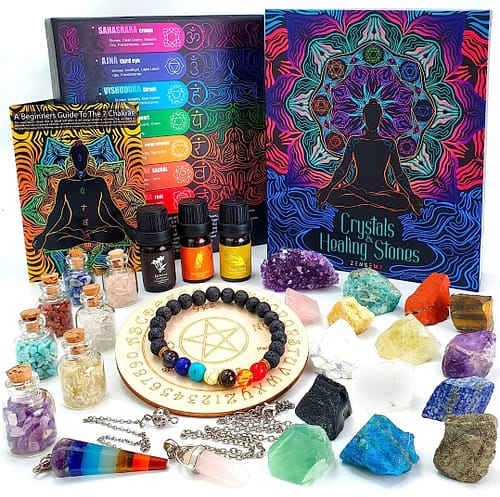













This is an amazing gift for one of your girls or for yourself. Love love love this!

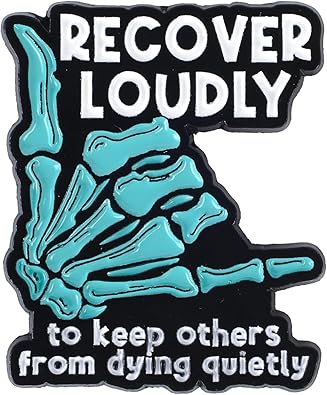
This is honestly one of my go-to's for gifts. I have purchased it for both of my neices, my sister, my friends, my mom and every single one of them raved about it.





F.I.O.A. And Find Out
FOIA & Find Out explores the declassified files they never expected ordinary people to read—CIA consciousness experiments, psychological operations, hidden human potential, frequency research, and truths stranger than fiction. But this series isn’t about fear. It’s about taking what we uncover and using it to think deeper, heal harder, awaken fully, and become far more difficult to manipulate.














0 Comments